
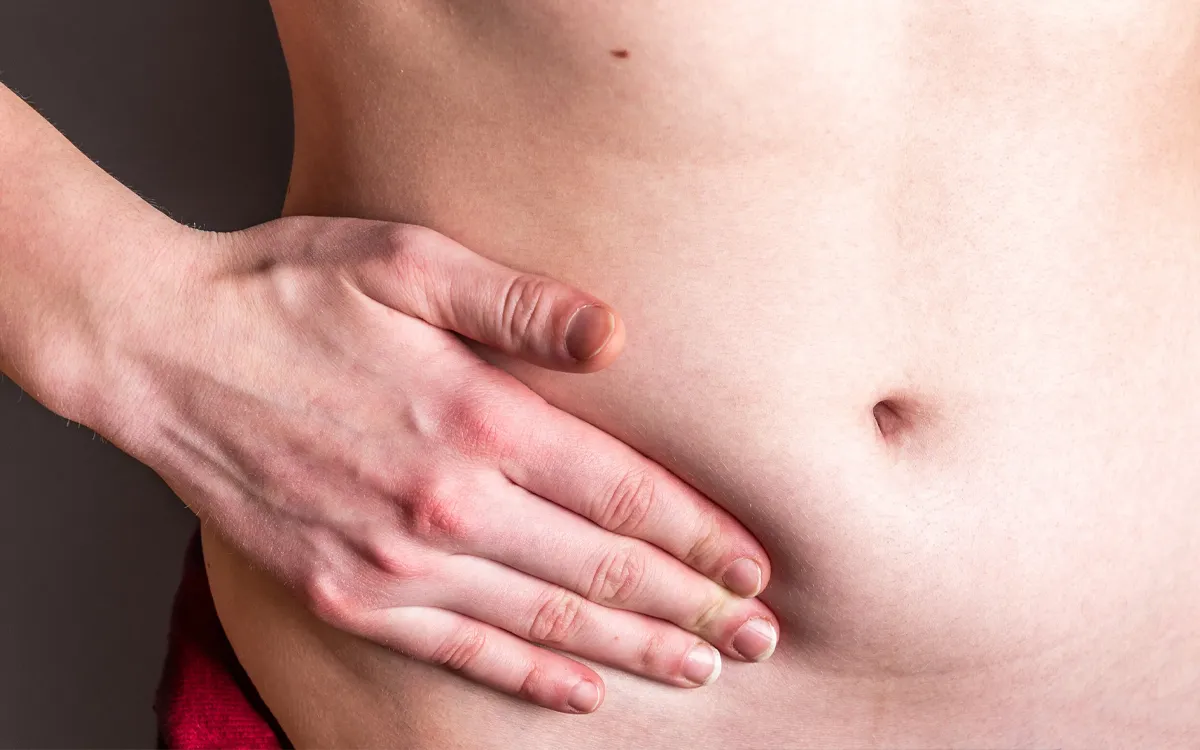
A hernia happens when a weakness in the muscle or tissue of the abdominal wall allows internal tissue to push through, creating a bulge. You may notice the lump more when standing, coughing, or lifting. Some hernias are painless, but many cause discomfort or a dragging sensation that can limit exercise or work. Common sites include the groin, the belly button, the midline of the abdomen, and previous surgical scars.
Main hernia types
- Groin hernias (inguinal): the most common. They can affect one or both sides and may return after a previous repair.
- Femoral hernias: less common and more often seen in women. These have a slightly higher risk of complications.
- Umbilical hernias: occur at the navel.
- Ventral and epigastric hernias: occur in the midline or upper abdomen.
- Incisional hernias: develop at the site of a previous operation.
- Sportsman’s groin (Gilmore’s groin): a soft-tissue disruption around the groin that can mimic a hernia and may need targeted repair.
Do all hernias need surgery?
If a hernia is small and painless, monitoring may be reasonable. However, a growing hernia or one that limits activity usually benefits from repair. Sudden, severe pain with a tender, fixed lump needs urgent assessment, as it may indicate a trapped or strangulated hernia.
Repair options
Repairs can be open or laparoscopic (keyhole). The best approach depends on hernia type, size, whether one or both sides are involved, and any previous surgery. Mesh is commonly used to reinforce the repair and reduce the chance of recurrence, though small hernias may be repaired without mesh. Laparoscopic techniques are often preferred for bilateral or recurrent groin hernias because they allow treatment of both sides through the same small incisions and can help with a quicker return to normal activity.
Recovery and results
Most hernia repairs are day-case procedures. Expect some bruising and tightness for a short time. Light walking starts on day one, desk work is usually possible after a week, and activity builds up over the next 2 to 4 weeks. Your surgeon will give personalised guidance for sport or heavy work.
When to seek help
If a hernia becomes suddenly painful, firm, or cannot be pushed back in, seek urgent assessment. These symptoms could indicate a trapped hernia that requires prompt treatment.
Next steps
If a hernia is affecting your daily life or exercise, a consultation can confirm the diagnosis and help you choose between open and keyhole repair.